Awards
- The 2025 Larry Levis Prize in Fiction for the novel-in-progress The Error Rate of Living Things.
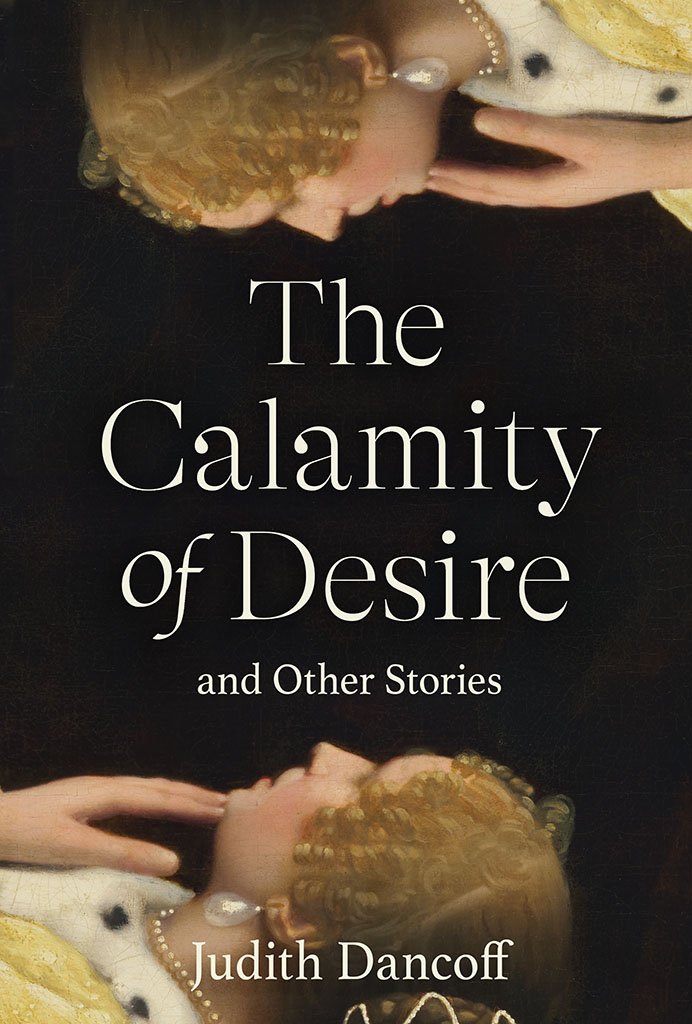
Awarded by Friends of Writers. The Warren Wilson Program for Writers. - The 2025 Best Short Story Collection for "The Calamity of Desire and Other Stories," by
The Next Generation Indie Book Awards. - Honorable Mentions, The Calamity of Desire and Other Stories. The Los Angeles and Paris
Book Festivals. 2024.2 - Pushcart Prize Nomination in Fiction, 2021 for "The Death of Ria Munk," ("The Calamity of Desire") published in Southern Humanities Review.
- Fellowship, Djerassi Resident Artists Program, June 2018, McElwee Family Fellow
- Fellowship, Virginia Center for Creative Arts, January 2017
- Fiction Prize for "The Root System of Trees," Tiferet Journal. 2014
- Residencies, Hedgebrook: 1996, 2011, 2012
- Theodore C. Hoepfner Award for "Terminus", Southern Humanities Review. 2012
Reviews
"Skilled critics help us understand art in its historical context. In these luminous stories, we experience the rest of that world—through families, through chance encounters, through desire—and are utterly changed."
— Diane Smith, author of Letters from Yellowstone and Pictures from an Expedition, and judge, the L.A. Times Festival of Books
"This gorgeous collection brings to life Foucault's dictum that meaning requires the viewer's inclusion. Readers are folded into classic artworks, transported across time and space. Art lovers, history buffs, storytellers—read this magical book!"
— Nan Cuba, author of Body and Bread, winner of the PEN Southwest Award.
"In Judith Dancoff's radiant stories, painterly subjects become narrators, celebrated figures are saturated with sinister shadow, and the artist becomes a canvas on which the process of art-making makes its transformative mark. The Calamity of Desire is both timeless and quietly subversive: an essential for any art lover, artist, lover, human."
— Juli Min, author of Shanghailanders
From Goodreads:
★★★★★ From Good Reads Reader Views May 16, 2024:
The eight stories in The Calamity of Desire and Other Stories are all inspired by or based on works of art. The author, Judith Dancoff, uses paintings or, for one story Roman glass, as jumping-off points. In each piece, she explores the mysteries behind the paintings or perhaps the unknown life of a model. The stories are rich in detail and are immersed in different time periods, covering topics as diverse as romance, empowerment, and wonder at the strangeness and beauty of the world. Dancoff has a powerful narrative voice, yet she easily adjusts it to meet the needs of each story and reflects the tone of the periods.
But to say these stories are inspired by art is sort of an injustice. These stories themselves are works of art. They are layered and nuanced, like fine confectionaries that, with each bite, your taste buds discover a new flavor.
The collection opens with "The Birthday of the Infanta," a period piece set in 17th-century Spain and inspired by the painting Las Meninas. The story is told from the perspective of the painter Diego Velazquez's sister as she describes her reflections on her life and that of her brother. It's a rich, historical piece that captures the period, the influence of religion, and life in the royal court.
The next story, "The Beautiful Gaze", transitions perfectly from the previous story in that it follows the artist, John Singer Sargent, who is inspired by Velazquez. Sargent, a late 20th-century painter, is questioning his abilities after a recent work, Madame X, is lambasted by the French art community. He leaves for a new start in London, leaving behind a lover and the shambles of a promising career on the continent. In London, he finds new friends and new inspiration and creates the painting that inspired this story, Carnation, Lily, Lily, Rose.
"The Calamity of Desire" is the centerpiece of this collection and, in my opinion, the most emotional. It is inspired by three posthumous portraits of a young woman by Gustav Klimt. The story, however, is told from the point of view of the young woman, spurned by her lover, she commits the ultimate sin and watches helplessly as her mother clings to the memory of her daughter. This story is raw yet thoughtful and it showcases some brilliant writing.
Another powerful and rich story is "Terminus". I found it an interesting mixture of light and dark themes viewed from the standpoint of Annie Oakley as she and her husband visit Paris while touring with Buffalo Bill's Wild West Show. The story is also inspired by the oil painting, Annah the Javanese by Paul Gauguin. Although fictionalized, the story touches upon real events and attitudes of the time, all relayed through the innocent eyes of Oakley as she is exposed to things she had never before considered. I found it deeply moving.
"Still Life with Cherries" is a subtle story that focuses on a young painter named Louise Moillon, who was active in the early 1600s. It follows her as she grows up in an artistic and deeply religious household, her coming of age, and her desire to become an artist. It serves as a reminder of what women have had to endure to follow their dreams, as well as the shackles put on them by both family and religious beliefs.
One of the more modern stories is "Roman Glass," which takes place in a fictional museum in Brooklyn, New York. The protagonist, Ruth, is not only a scholar of the art of collecting but is also a collector herself. She is caught between one man who ignores her and another who wants more from her. But despite her reluctance, she finally begins to realize that she can control her future. It's a well-written story that stands out as the only one in this collection that isn't inspired by a specific piece of art or artist.
The longest story in this collection is a novella titled, "Women Bathing." It's inspired by the later works of Renoir and some of his controversial comments about women, Jews, and other Impressionists. It follows Marie, a young widow from the French countryside who has traveled to Paris, against her family's wishes, to become a painter. I found this story to be a wonderful example of pure storytelling. Marie has low self-esteem, which isn't surprising as she's the only woman in her painting classes. But she befriends a young man from America and another from Africa, and together they form a friendship that carries them through a turbulent moment in French history; the Dreyfus Affair at the turn of the last century. Renoir plays a substantial role, not only as a secondary character but also as a catalyst for Marie's enlightenment. It's a beautiful story that immersed me in both the rush of Parisian streets and the lush French countryside.
The final story, "Vermeer's Light," takes place in the mid-20th century and follows a painter, Julia, who is studying Vermeer and falling in love with a married man. She lives in a building comprised of artist studios. Her interest falls on Abe, a photographer who rents a small space in the same building. The slow build-up of their relationship is well done, and I found myself sympathizing with both characters. Their daily routine is interrupted by the arrival of new tenants, a young hippie woman and her musician boyfriend, both newly arrived from Prague. This isn't quite a love story. It's more a story of introspection, coming to grips with reality, and self-realization. It's a lovely, quiet way to close a wonderful collection of stories.
I recommend this short story collection The Calamity of Desire and Other Stories by Judith Dancoff to anyone who loves art, artists, and beautifully written stories.
Individual Reviews From Goodreads and Amazon:
★★★★★ Fascinating stories based on the lives of artists and/or their work. I learned so much about Valezquez, Klimpt, Renoir and others. I especially enjoyed the novella-length "Women Bathing," based on a fictional (I think!) woman artist who began as a model for Renoir but couldn't stand his anti-Semitism during the Dreyfus Affair and his dismissal of Zola -- using the newspaper reports of the writer's "J'Accuse" as a scrap paper to wipe his brushes on. Great writing and vivid descriptions of the art work! (Goodreads June 20, 2024)
★★★★★ After savoring these stories slowly over a period of months, I've just finished reading The Calamity of Desire and I need to affirm all the comments and blurbs: IT'S GORGEOUS!! These stories are so beautifully crafted. In language that feels effortless, each story slips through time to create its own world of places, people, and paintings. Judith Dancoff has assembled a collection of stories as rich and tangible as the artwork than inspired them. (Goodreads Dec 9, 2024)
★★★★★ What an inventive and exquisitely written exploration of the artistic impulse and its effect on both creatives and those surrounding them. Dancoff offers the reader a window into the stories behind paintings by such well-known artists as Klimt and Gauguin, as well as the lesser-known Louise Moillon. Highly recommended! (Goodreads May 25, 2025)
★★★★★ Unique, Empathetic, Beautifully Written Stories. In each of these stories, writer Judith Dancoff takes inspiration from a painting and dives into the lives of people depicted in it. She explores disparate places and periods, always with detail, imagination, and compassion. We learn the thoughts and hearts of painters and models, aristocrats and beggars. My favorite heroine is Annie Oakley, at the peak of her career, performing in an exposition in Paris, still haunted by her own brutal childhood and disturbed by the young Tahitian girls displayed in the same fair. (Amazon June 27, 2024)
★★★★★ Unlike anything you are likely to have read
This is a remarkable collection of stories. In her finely-tuned, sometimes exquisite prose, Dancoff's common theme is that each tale relates in some way to a particular work of art. Mostly they are about the artist/creators. I found every one of them involving, detailed, personal and sometimes heartbreaking. Nothing feels about them feels didactic, but I learned a lot from an author who clearly has a love and a deep and admiring knowledge of great paintings in history. At the end of each story, I found myself wanting to know more about the artist and the painting and going online to satisfy my continuing curiosity. Really a singular reading experience. (Amazon May 8, 2024.)
★★★★★ Beautiful Stories about the Eternal Intersection of Art, Truth and History
The Calamity of Desire is a fascinating and beautiful collection of stories inspired by art and artists and their intersection with history, politics, and social change, especially in relation to women and their position in society. The author's language is both powerful and poetic, conveying the gamut of human relations, from tender to terrifying. (Amazon May 6, 2024.)
★★★★★ Eloquent and Provocative Collection of Stories
If you like looking at art and learning more about how and when great works of art have been created, this book of short fiction is for you. In sensitive and imaginative prose, Dancoff evokes crucial decisions and encounters in the lives of painters (Sargent, Renoir, Klimt, to name a few) and their subjects. An added bonus is an unsettling novella about Annie Oakley when she performed at the Paris Exposition (Amazon April 5, 2024.)
From Everybodysreviewingblogspot.com, July 27 2024:
★★★★★ I read this book in one sitting. No, I tell a lie, part way through I had to email the author to tell her what a wonderful work she had produced. I've never done that before, but if you read this collection of amazing short stories you will understand.
This is a truly beautiful collection of stories, most inspired by artists and works of art. The one outlier is a tale surrounding Annie Oakley, re-imagining her life on a trip to Paris where we are able to discover the vulnerabilities of a woman who dragged herself from the gutter to being the world-famous markswoman of lore. This story delves deep into her upbringing and lifestyle while commenting on the morals of the time with criticisms of well-known contemporary artists. This re-imagining is so clever and takes a real talent. A talent that is replicated through the collection.
Many of the stories play on the emotions of the reader and allow us a vision that we would not have imagined. We play a part in their lives and stories. We discover another life that Dancoff imagines and who are we to tell reality from fiction. The beauty of the stories is that we can never know the reality. How Dancoff can draw out the allusions and images she makes is nonpareil. The life of the Infanta, the subject of the artist Klimt, the work of Louise Moillon, a sitter for Renoir during the Dreyfus affair, a curator at a museum, and a Vermeer inspired artist searching for love.
Each tale made me research the artists and artworks that inspired Dancoff so introducing me to another layer of interest. And the beauty of the paintings is something else. This window into another world is just one of the benefits of reading the stories. They are delightful. Poignant and revealing, in some cases enchanting. There is a wistfulness to many and historical perspectives are showcased. A great deal of research has obviously gone into each story as each is grounded on fact.
I thoroughly enjoyed The Calamity of Desire and wholeheartedly recommend it.